
Dental Implants Q&A
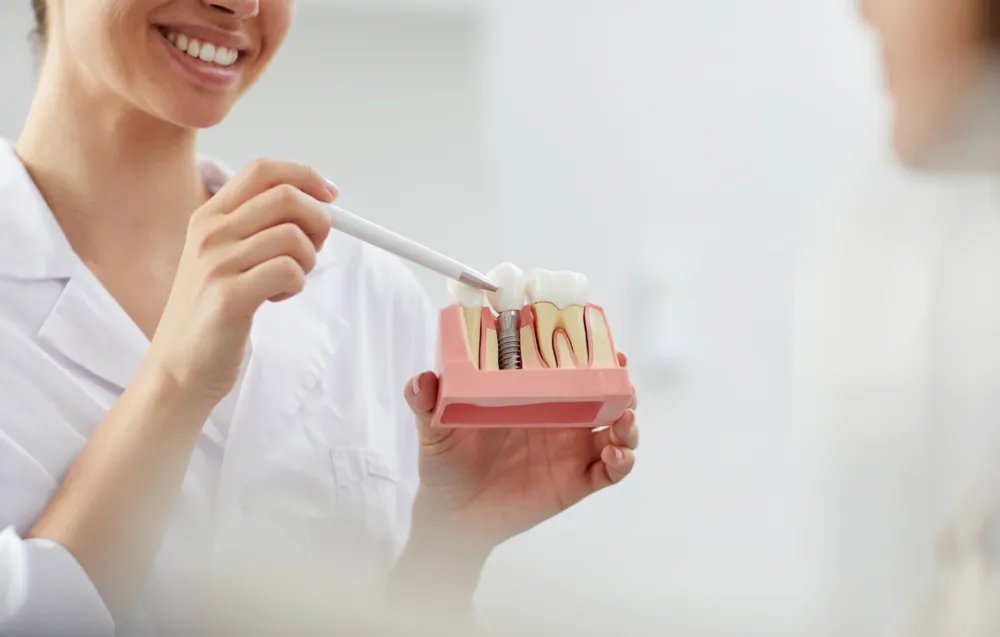
Tooth loss can occur due to a variety of reasons, including decay, gum disease and physical injury. Even with good oral hygiene, tooth loss can sometimes occur. Missing teeth can seem like a big problem, but with dental implants, a solution is readily available. Modern dental implants can offer an alternative to traditional dentures.
Dr. Maher Kemmoona and Dr Breandán O’Niadh are two of our dental implant specialists at Northumberland Dental Care. Below, they have answered some of your frequently asked questions about dental implants.
Q: What are dental implants?
A: Dental implants are artificial roots that can be used to anchor crowns, bridges or dentures, providing a solution to missing teeth. The implants are embedded in the jaw and fuse to the jawbone to imitate the root of the tooth. The implant provides a stable foundation onto which a crown, bridge or denture can be placed.
Q: Why are dental implants used?
A: When natural teeth are lost, the bone supporting these teeth begins to shrink away, leading to bone loss. Dental implants help prevent this bone loss and ensure your mouth’s bone structure is maintained. Dental implants also create an enhanced appearance, increased comfort, improved chewing and speech, and better longer-term oral health.
Q: Can I replace a single tooth with a dental implant?
A: Yes. If you are missing a single tooth, a dental implant and crown may be an ideal solution. The implant provides a foundation for a ceramic crown to replace the missing tooth, preventing further bone loss.
Q: Can I use dental implants to replace all of my teeth?
A: Yes. In cases where a number of adjacent teeth are missing, implants may be used to support a bridge. This protects remaining healthy teeth and also prevents further bone and tooth loss. If most or all your teeth are missing, multiple implants can be placed to securely anchor a denture.
Q: How do I know if I am a suitable candidate for dental implants?
A: During an initial consultation, we will assess your suitability based on a number of factors, including your overall oral health, how many implants are required, whether any bone or tissue grafting is needed, and the healing time required.
Following your consultation, we will typically schedule your implant placement and follow up appointments. You will receive comprehensive information regarding your treatment and advised about what to expect. If you have been referred by your dentist, we will maintain strong communication with them throughout your treatment.
Q: What options are there with dental implants?
A: Single Implant Restoration
In cases where you are missing a single tooth, a dental implant and crown may be an ideal solution. Here, an implant is placed which serves as a foundation for a ceramic crown. Using this method, neighbouring teeth are not compromised and bone loss that is associated with the missing tooth area is halted.
Supporting Dental Bridges
In cases where a number of adjacent teeth are missing, dental implants may be used to support a bridge. Here, one or more dental implants are placed and serve as a method of firmly fixing a bridge. Unlike the traditional bridge preparation, which requires supporting teeth to be ground down, this method protects the remaining healthy teeth while also protecting further loss of natural bone associated with tooth loss.
Anchoring Dentures
In cases where many or all teeth are missing, dental implants may be used to anchor a denture. Here, multiple strategically placed dental implants are placed to ensure that the denture is securely attached. A number of treatment options are possible including removable dentures, which are fixed on an implant bar and screw-retained bridge. Unlike a traditional denture, this method does not require the use of adhesive and ensures more comfort and functionality for the patient.
Q: How long does dental implant treatment take?
A: Dental implant treatment can take anywhere between six weeks and six months, depending on your individual needs. Your dentist will provide you with a temporary plant crown, a denture or retainer so you will not have any unsightly gaps while the area heals. After the implant is placed and has healed, your implant clinician will recommend whether you require a denture, crown or bridge.
Q: Is dental implant treatment painful?
A: No, your implant clinician will always use effective anaesthesia to ensure that the procedure is pain-free and comfortable.
Q: How long will dental implants last?
A: With proper care and maintenance, implants can last as long as conventional restorations on teeth. They are extremely durable, and implants can potentially last a lifetime with appropriate maintenance.
For more information on dental implants at Northumberland Dental Care, you can visit our website here. If you wish to book a consultation, please contact us on (01) 668 8441 or email info@nidm.ie.